Friday, January 23, 2026

How might we grow our leadership in order to take action on what matters so that students and teachers thrive together?


In my last post I attempted to capture within a single framework the things that mattered most when we strive for deep learning for all learners. My most succinct summary would be that
we need to focus on being Warm & Demanding (caring for students while having high expectations for and of them and for ourselves and colleagues) while promoting high levels of student agency and using a wide range of proven teaching strategies that allow for that.


The previous post identifies flaws in this framework and it is still very much a work in progress. But let’s go with it in the meantime.


So, how do we take action in this space? The answer is Leadership.


But a particular type of leadership - leadership that is driven by a strong moral purpose to do what is right for our learners, our staff and our school and its community; leadership that has courage to bring that moral purpose to life; leadership that is open to learning and doing things differently.


However, if you have the courage to take action and are open to learning and doing things differently you still need tools and strategies to take action, overcome resistance, maintain momentum and embed the transformation.


Over the past couple of years my colleague Derek Wenmoth and I have been running some boutique PD programmes to empower leaders for transformational change. With those programmes we worked with individual leaders, within a group setting, to bring a particular change idea they had into fruition. 


We are now in a position to offer a range of flexible programmes for individual leaders, networks of across schools leaders (PLGs), and school based senior leadership teams and/or middle leadership teams.


Across four face-to-face sessions and regular on-line connection spread over a 12 month period we undertake four purposeful cycles that take you on a journey from self-discovery to sustainable impact. Participating as an individual or as part of a leadership group, you’ll explore what drives you as a leader, translating that understanding into how you lead and empower others, develop strategies for managing conflict and change, gathering evidence of your growth along the way to create systems that celebrate, sustain, and share your success.


Our experience with our previous work means that it is important to not  only focus on tools and strategies, but also to surface how we feel about our work, how we want to and not want to feel, how we want fellow team members to feel about their work and our team, and how we want those whom we lead to feel and not feel. We all respond emotionally to our work and particularly to change and we must be purposeful about the emotions we wish to promote and those we wish to manage.


The design of these programmes, particularly those for PLGs and senior and middle leadership teams, has been informed by our work when working with teams to spend time describing the culture we aspire to and agreeing on the norms and ways of working that contribute to this culture. Such a focus makes it more likely that the team will be successful in its work


All the information you need on any of these programmes can be found here. Simply register your interest through the link or email me directly at maurie@hmwlead.co.nz. You can also access a flyer with all details here.


The frameworks explored in my previous post have helped shape the GROW programmes which are focused on supporting you to make the changes you want in your schools.


Reach out if you want to talk further.


Thursday, January 22, 2026

How might we focus on what matters so that students and teachers thrive together?

I haven’t published anything for 6 months. Rather, I’ve spent my time being overwhelmed with the publishing others have done and trying to keep up with people’s takes on the madness of the sheer volume and pace of system imposed change on schools. In my 45 years of involvement in schools and education I’ve seen nothing like it. When I read the writings of those involved with Aotearoa Educators Collective (AEC) (you know who you are) and Derek Wenmoth’s regular pieces I am in awe and haven’t felt that I could add anything of value to the current context.


Those of you who have read my posts in the past know that I regularly go on about the importance of being aware of then being true to your driving values and having the courage to stick to them, especially when the ‘weather’ gets roughest. I’ve often used Julia Atkin’s circle framework to describe how to do that:

You’ll also, possibly, know that I am a fan of frameworks that we can use to help us stay true to our vision; at least a vision that inspires us to contribute to an education system that allows students and teachers to thrive, one in which students and teachers both have agency.


Apart from Julia’s Circles, which have been the foundation of how I have operated and support others to do so, my go-to frameworks are below: the first drawn from Margaret Thorsborne’s work on Restorative Practice and encourages us to operate as often as possible in the top right corner by being Warm & Demanding. The second comes from Russell Bishop’s work on teaching and leading to the north-east and encourages us to operate as often as possible in the top right corner by combining high relational skills and high teaching skills. The third comes from Disengaged Teens which encourages us to teach and manage our classrooms in such a way that our learners locate themselves in the top right corner where they experience high levels of agency and high levels of engagement.


While out for a run the other day a thought popped into my head: each of these frameworks have us striving to be in the top right corner, how hard would it be to combine them together to make some sort of ‘super’ framework.


So I gave it a go!


Structurally, it was easy to place accurate descriptors in the correct quadrant. However, this current framework doesn’t quite fit nicely.


The green highlighted texts describe students with that particular combination of engagement and agency (high or low) (from Disengaged Teens) and the yellow highlighted texts describe teachers with that particular combination of relationship and teaching skills (high or low) (from Russell Bishop).


But it doesn’t work in a neat and tidy way e.g. Achieving Students (High Engagement Low Agency) do get great grades so those teachers must display some good teaching skills and couldn’t be described as ‘Undemanding’. I could, however, suggest that they might have a narrow range of teaching skills that they are very good at and do not include those that would support students to be lifted into the top right corner and become Explorers.


Similar inconsistencies exist in the other quadrants, especially those on the left.


Anyway, I haven’t given up on tweaking this to see if I can make it more useful. Any suggestions will be most welcome.


The thought I leave you with, especially if you work and/or lead in schools and are about to kick off 2026, is that you try to look for ways to lift students into the Explorer quadrant by allowing for more, not less, agency on their part and that you show them every day that you care for them as individuals and as learners, and that you have high expectations of them to learn deeply and of yourself and colleagues to find ways for everyone of them to learn deeply.


Of course, the big question is how do we do this? I’ve got some ideas to share in my next post.


Friday, July 11, 2025

How Might We Keep Learning How To Lead?


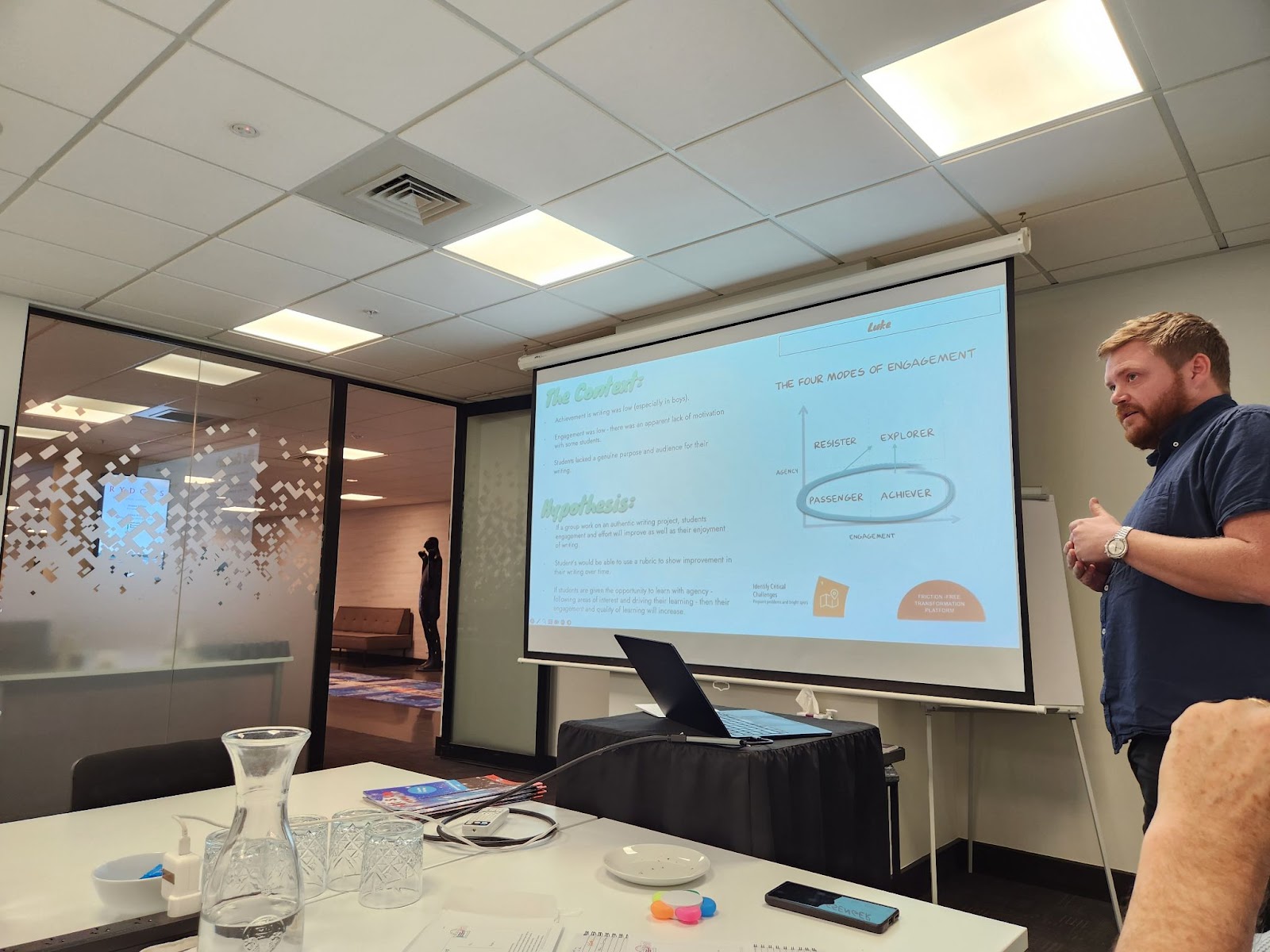
Last week Derek Wenmoth and myself hosted a Day of Celebration for 18 APDPs who had participated in our 20 week Refresh Reconnect Refocus (RRR) programme.


Programme Structure

The programme aimed to help Senior Leaders develop their leadership capabilities and to explore opportunities for meaningful change. It focused on three key areas:


  • Refresh: Taking a pause to reflect on personal and professional priorities

  • Reconnect: Exploring personal motivations and learning tools to plan and maintain momentum with a personal focus area

  • Refocus: Developing a future focused approach with a supportive community and practical steps 


The programme structure included:

  • An initial three day retreat in Wellington

  • A 20 week period of on-line support, including whole-group meetings and one-on-one coaching/mentoring

  • A one day celebration event


Range of Focus Areas

A feature of the programme is that participants are given support to decide on their particular focus area over the 20 weeks. They are provided with tools to flesh out their thinking, develop a hypothesis, create a plan to test their hypothesis, embrace experimentation and maintain momentum.


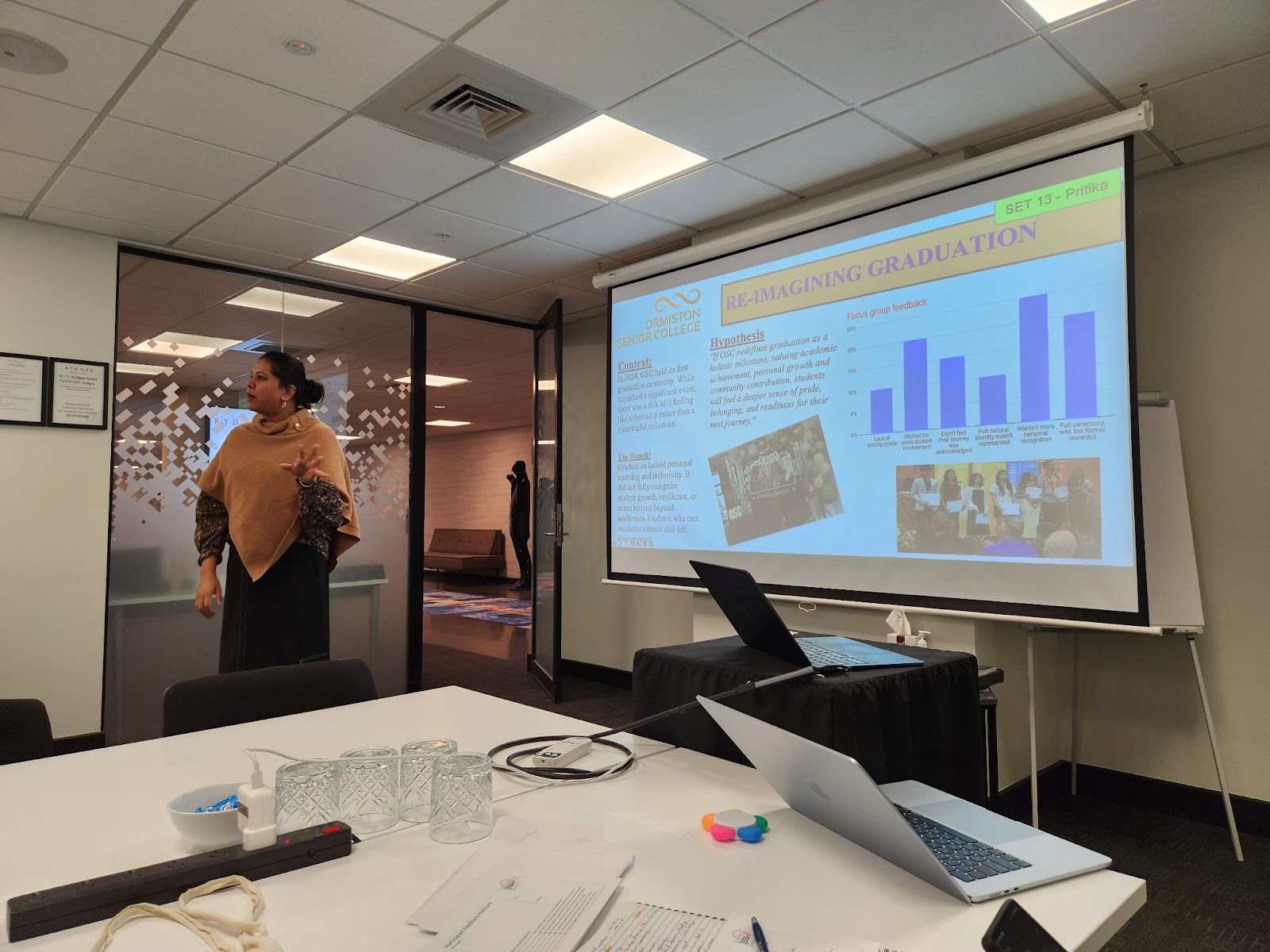
At the Day of Celebration we heard their stories across a range of issues which included:

  • Imagine if Assessment for Learning practices were consistent across the school.  All children would be exposed to a consistent process for learning, no matter the context.  Language would be consistent so there is no cognitive overload, allowing the focus to be on agentic learners who are in charge of their learning.

  • Imagine if students were exposed to and learned how to have more agency in their learning, and in doing so experienced deeper learning, higher levels of engagement and satisfaction - enjoyment even! Imagine if school was a place students wanted to be!

  • Imagine if our School was the school where every Year 11 teacher was deliberately tracking and  planning interventions to student learning and achievement  Imagine if every Year 11 knew that their teachers, Deans and DP cared about their learning and knew they were being actively helped to achieve.

  • Imagine if we adopted a coaching and mentoring mindset, so that leaders can empower their teams, foster a sustainable leadership culture, and create clear pathways for growth at our school. Through structured models and targeted mentoring, we can then unlock leadership potential and drive lasting impact.  

  • Imagine if, as educators, we embraced a culture of experimentation and failure in our own teaching practice. What if we gave ourselves the freedom to try new strategies, tools, and approaches without the pressure to get everything perfect? Imagine the impact it could have, showing our learners that failure is simply a stepping stone to success and that true growth comes from the courage to experiment, learn, and evolve.

  • Imagine if every student left our School as a confident, competent writer? A writer equipped with the skills to succeed in NCEA Literacy and pursue their chosen pathway in life. We’re confident we have a program that will have a profound impact—not only on your teaching but also on the students you work with. This is the opportunity we have to shape their future with an amazing explicit writing programme.

  • Imagine if we developed a Graduation Ceremony which truly captured a broader definition of success and acknowledged the journey of growth experienced by our ākonga.

  • Imagine if we could ensure that wellbeing thrived in our school for all by having a specific and proactive focus to support groups of students who have serious, stubborn and identified needs in our community – our rainbow, migrant and disabled students. 


Outcomes

All participants acknowledged that the level of momentum they were able to maintain would not have been possible without the support of the like-minded leaders with them on the programme and the one-on-one coaching and mentoring provided. This is a unique feature of this programme.


These 18 are now part of a graduation cohort of 50 leaders in Aotearoa and Australia who have completed these programmes.


What Did Participants Say About The RRR Programme?

  • I rated it 10/10 because it offered a powerful blend of professional connection, strategic insight, and personal recalibration elements often overlooked in the relentless pace of school leadership.

  • I really enjoyed meeting all of the other course members, and having the chance to learn and grow from others in a similar role to me.  The expert support from Derek and Maurie was inspiring and motivating.

  • The most valuable elements for me were those that helped deepen my self-awareness and clarify my purpose, especially the work around understanding my 'why' and the one-on-one mentoring sessions. These provided both affirmation and stretch.

  • One unexpected benefit was the opportunity to pause and genuinely reflect in a structured yet low-pressure environment, something that’s rare in the fast pace of school leadership. This space helped me reframe challenges not as operational problems to solve, but as leadership opportunities to approach with clarity and intent.

  • Maurie and Derek provided exceptional inspiration and mentorship throughout the programme, guiding participants with clarity, wisdom, and deep educational insight. Their coaching empowered every individual to grow as a more effective and reflective leader of learning and education. The connections made with fellow leaders of learning in their respective roles was a highlight - after all, sharing is what wise teachers and leaders do best! Thank you all!


The Good News

We’ve been asked to offer this opportunity again in 2026 so are opening up for registrations of interest through this link. If you are seeking further information please visit our website.


Thursday, July 10, 2025

EdRising: How Might We Turn a Moment Into a Movement?


How Might We Turn a Moment Into a Movement?


This is the challenge Derek Wenmoth set us as he welcomed us to the 2 day EdRising Convening held over the last 2 days at Albany Senior High School.


100 education sector representatives including teachers, leaders, professional development providers, and system leaders gathered to listen to both global and Aotearoa thought leaders address a range of provocations across 5 major themes - including a panel of current primary and secondary ākonga.


Littered throughout the 2 days were several opportunities to process and respond to what was being shared with us as we set about trying to shape a future focused education system for Aotearoa.


Equity and Agency

Rhonda Broussard really set the scene for me when she highlighted the connection between Equity and Agency. She shared her position that addressing Equity is a mammoth challenge and can easily overwhelm us, but that if we focus on the more manageable, but still complex, issue of Agency we begin to break down the inequities.


She invited us to ponder the question, “who has the right to access inquiry/agency?” It made me wonder that are we more inclined to provide true agentic, inquiry-based learning to one set of students and not to others. While I was principal at Hobsonville Point Secondary School I was often told that what we were doing was all good for students from our socio-economic cohort but would not work in schools of lower socio-economic status. I absolutely despair of that view. We need to have Rhonda’s question out from under the shadows.


She also stated that we must be able to answer “why are we learning this?” whenever it is asked.


Purpose and Meaning - Our Why

Tony MacKay prompted us to be clear about our purpose, align our values and beliefs to that purpose and to align our practices to that purpose.


Martin Westwell reminded us that our first choice is to be purpose-driven, and George Philhower emphasised that simply changing practice does not bring about transformation - it’s our values and beliefs that drive transformation.


Maxine Graham reinforced that our values are within us and that we must reflect these at all times.


Tony Monfiletto emphasised that the number one priority in relation to education for young people is to experience learning with meaning and purpose.


Te Riina Leonard left us with an inspiring, possible vision for our work - Nurture the children, leaders of tomorrow.


Outdated Model

Jeff Wetzler stated the tragic fact that most students are learning in an outdated model of schooling and Bill Lucas talked about our system and schools not being fit for purpose.


A Way Forward?

One of my table participants reminded us that 95% of Maori learners are in mainstream schools and generally not experiencing success, while the other 5% within Kura Maori are experiencing high levels of success, suggesting the answers for addressing inequity already exist here in Aotearoa.


Hana O’Regan challenged us to acknowledge the coloniality of power, of knowledge and of being so we could acknowledge our inequitable history, and acknowledge that our tamariki have been exposed to a lifetime of biases, prejudice and racism before we accept what we are going to leave behind so that we can move forward.


Barbara Ala’atoa implored us to acknowledge that curriculum is the most powerful weapon that we have and that by maximising that power we can do the right things for our ākonga despite external pressures and mandates. And Bill Lucas challenged us to join the “unstoppable practitioners out there exerting influence.”


Sandra Milligan revealed that in all her work and research that the real impetus for transformation comes from within schools, which reminded us to believe in the power that we have. Her call to provide “dignity of equal status” to both academic and knowledge learning and to dispositional growth resonated with the participants.


The panel of ākonga from Stonefields School, Albany Senior High School and Hobsonville Point Primary blew us away with their simple formula for what made learning engaging and meaningful for them:  teachers who cared for them, teachers and students collaborating, teachers engaging with my learning.


Redefining Success

Sarah Martin shared her school’s mission to measure what they truly value driven by the principle that assessment must Do No Harm. She shared the awesome tool of SchoolTalk and how that was being used to make sure that the way we measure ākonga does not limit our redefining of success.


One of the participants at my table felt liberated by what she heard as she reflected on the fact that we have never been brave enough to truly define success. After Sarah’s presentation (complementing that of Sandra Milligan) we could see it was now possible.


Moment to Movement

Now the hard work really begins as we process the feedback from the participants and look for ways to drive momentum as we move to establish a movement to transform our schooling system.


There’ll be plenty of opportunities to join in and contribute to the movement. In the meantime check out our EdRising webpage and watch this space.


Saturday, April 19, 2025

How Might We Tend The Fire Together?


Last week Derek Wenmoth and I spent 3 days in Melbourne facilitating a 3 day retreat for 18 Lutheran educators and leaders to kick off the 20 week
Refresh Reconnect Refocus (RRR) programme in Australia.

Derek has already published a post about the 3 day retreat which you can read here. He’s also published another post, What’s Lighting Our Fire?, which emerged from his reflections on the RRR retreat. He wonders, in this post, if we aren’t focusing enough on what’s worth fighting for and perhaps focusing too much on issues to fight against. 


I particularly liked his metaphor of us tending the fire together and his posing of the question:


What if choosing to put our energy into visioning, building, and nurturing the kind of system we believe in is the most strategic and courageous thing we can do right now?


This got me thinking about the importance of doing this together with like-motivated people and creating a movement to keep the fires burning and maintaining the momentum towards a transformed system, rather than merely focusing on individual schools.


I’ve been doing a lot of thinking about the RRR programme Derek and I have been leading over the last 18 months. In that time we have worked with 3 cohorts - 14 primary and secondary school principals from Aotearoa NZ and Rarotonga, 18 primary and secondary assistant and deputy principals from Aotearoa, and 18 principals and senior leaders from New South Wales and Victoria. 


One of the areas we focus on in the programme is on supporting the leaders to dive deeply into their personal why, explore how that can become a moral purpose for them in their work, discover tools to support them in that work and to use a change framework that maintains momentum over a 20 week period.


However, we were determined to support the leaders to realise that they don’t have to be alone in this week, but that it is more important that they see themselves as a network of leaders not only grappling with similar issues but also having similar dreams of how things could be. They each have a buddy with whom they check in with each week, each is teamed up with either Derek or myself for 3 weekly 1-on-1 remote mentoring sessions, we gather together remotely to participate in webinars with international thought leaders and to share our journeys to that point, and then we all come together for a final day of celebration.


We have built these features into our unique programme to emphasise that we’re all in this together. These elements act as accountability mechanisms and have us tending the fire together.


So, what have the participants said about the programme?


“The programme has re-ignited my leadership focus. I feel re-energised, re-focused and ready for action! Not only have I rediscovered my motivation for leadership, but I also gained a support network of like minded people I feel I can call on when needed. I don't particularly have that in my own context, but I've found it here.” 

NZ Principal


“Realistic and relevant, inspiring and helpful, a collaboration that flows and makes sense.”

NZ APDP


“What a terrific opportunity to connect and learn alongside colleagues whilst being led by the very passionate Derek & Maurie. Inspiring, thought provoking and exciting journey to explore over the next 20 weeks and beyond!”

Australian Senior Leader


So, that’s 50 school leaders who’ve delved deeply into their ‘why’, who’ve imagined what might be possible in their schools with the support of those on the programme, who’ve discovered tools that will allow them to maintain momentum, who’ve identified a particular challenge to focus on, who’ve adopted an experimental mindset as they plan next steps within a rigorous change framework and who see themselves as system leaders.


Sounds like the beginnings of a movement to me.


If this is a movement you’d like to be part of send us an email at threersprogramme@gmail.com and we’ll keep you informed about our future programmes.


While I believe our RRR programme is a vital component of any movement, it is part of a wider ecosystem involved in tending the fire. Other key networks include DisruptedNZ and Aotearoa Education Collective (AEC).


There is a real sense of community and momentum developing. AEC is running an impressive UpliftEd conference in October which I highly recommend checking out and the Disrupted Facebook page and X account is a particularly active sharing space.


I challenge education people who want to be part of a movement of school and system transformation to participate in all opportunities such as those above and others still to come. Watch this space.